Key facts
- Extremely commonMost university students report procrastinating, and around 15–20% of adults do so chronically.1
- Not simply lazinessResearch frames it as short-term mood repair: we delay to escape an uncomfortable feeling.2
- Self-forgiveness helpsForgiving yourself after procrastinating is linked to less procrastination next time.3
In plain words
You open your laptop to start an assignment and an hour later you're still scrolling. You're not alone. The task stirs up anxiety, boredom or fear of a bad result, and putting it off brings instant relief. That relief is what keeps the habit going, which is why procrastination is more about managing emotions than managing time.
Everyday examples in Indonesia
- StudentsThe skripsi chapterPutting off the undergraduate thesis chapter before a supervisor meeting, then writing it overnight.
- Exam seasonUTBK-SNBT practiceDelaying practice because a low try-out score feels discouraging.
- ParentsThe check-upPostponing a child's development check-up out of worry about the result.
Small steps that help
- The 5-minute ruleCommit to just five minutes. Starting is usually the hardest part.
- Shrink the task"Write three opening sentences", not "write chapter 2".
- Decide when and where"7 pm, at my desk, phone in another room."
- Be kind to yourselfHarsh self-criticism tends to make avoidance worse.
From Instagram & TikTok
Video transcript
Do you keep putting tasks off even though you know it'll cost you later? Reason one: the task feels uncomfortable, whether that's anxiety, boredom or fear of failing. Reason two: the reward is far away, while scrolling feels good now. Reason three: the task is so big you don't know where to start. Try the five-minute rule: just do five minutes.
 newroneduInstagram
placeholder: isi URL postingan asli di terms.json → embed resmi Instagram otomatis
Post text
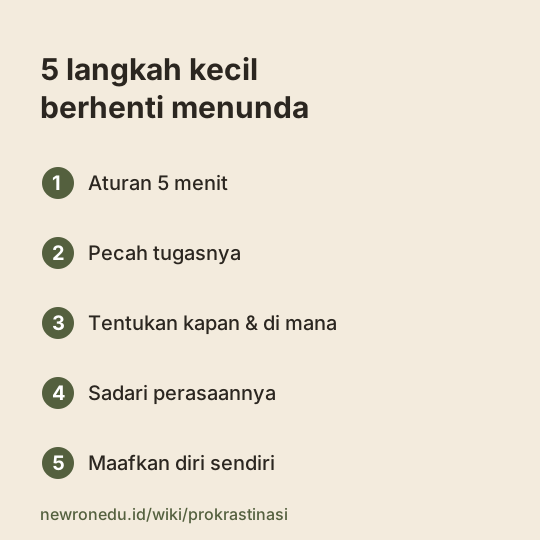
- Aturan 5 menit
- Pecah tugasnya
- Tentukan kapan & di mana
- Sadari perasaannya
- Maafkan diri sendiri
When to seek help
If procrastination is long-standing, disrupts study, work or relationships, or comes with persistent anxiety, low mood or serious trouble concentrating, consider speaking to a psychologist.
In Indonesia, the Ministry of Health mental-health line is 119 ext. 8. verifikasi sebelum terbit
FAQ
Is procrastination the same as laziness?
No. A lazy person doesn't want to do the task; a procrastinator wants to but keeps delaying it, often to avoid uncomfortable feelings such as anxiety, boredom or fear of failure.
What is procrastination in Indonesian?
In Indonesian it is called prokrastinasi, or informally suka menunda-nunda.
References
- Steel P. The nature of procrastination: A meta-analytic and theoretical review of quintessential self-regulatory failure. Psychological Bulletin. 2007;133(1):65–94.
- Sirois F, Pychyl T. Procrastination and the priority of short-term mood regulation: Consequences for future self. Social and Personality Psychology Compass. 2013;7(2):115–127.
- Wohl MJA, Pychyl TA, Bennett SH. I forgive myself, now I can study: How self-forgiveness for procrastinating can reduce future procrastination. Personality and Individual Differences. 2010;48(7):803–808.
Read next (in Indonesian)
- emotion regulation
Regulasi emosi
Regulasi emosi adalah kemampuan mengenali, memahami, dan mengelola emosi supaya respons kita sesuai dengan situasi.
- habit
Kebiasaan
Kebiasaan (habit) adalah perilaku yang dilakukan hampir otomatis karena sering diulang dalam situasi yang sama.
- welas diri
Self-compassion
Self-compassion adalah sikap memperlakukan diri sendiri dengan baik dan pengertian saat gagal atau sedang kesulitan, seperti kita memperlakukan teman dekat.
- kelelahan kerja
Burnout
Burnout adalah kondisi lelah fisik dan mental akibat stres kerja berkepanjangan yang tidak berhasil dikelola, ditandai rasa terkuras, sinis, dan merasa kurang efektif.
- berpikir berlebihan
Overthinking
Overthinking adalah kebiasaan memikirkan sesuatu secara berulang dan berlebihan sampai sulit mengambil keputusan atau merasa tenang.
- ritme sirkadian
Circadian Rhythm
Circadian Rhythm adalah ritme biologis sekitar 24 jam yang membantu mengatur berbagai proses tubuh, termasuk kapan kita mengantuk dan terjaga.
Community notes
Help improve this page: corrections, examples from your experience, sources, questions, or terms we should add. The most helpful notes are reviewed by the team and can make it into the page.
Discuss in the forum (Indonesian)
Written by the Newronedu team, founded by Agatha Chelsea (BSc Neuroscience & Psychology, University of Melbourne) · Reviewed by [Name], M.Psi., Psikolog · Editorial policy
For general education only; not a substitute for professional advice or diagnosis.